
Ripple Rock Reduced to Rubble
If you take a cruise on the inside passage from Vancouver BC to Alaska, or vice versa, you need to go through Seymour Narrows. It’s one of the many spots where the ship’s captain brings on a pilot with detailed local knowledge to navigate a difficult section of the journey. When we sailed through this past summer, it was uneventful— see the photo above — but it used to be treacherous.
In 1792, George Vancouver, called it “one of the vilest stretches of water in the world” because, just below the surface, there was a mountain that became known as Ripple Rock. At low tide, the higher of its two peaks was only 9 feet below the surface, and it created vicious tidal turbulence. 119 vessels have gone down attempting to make their way past the submerged obstacles.
There were unsuccessful attempts to blast a deeper channel in the 1940’s, but in 1953 Canada got serious about fixing it for good. They tunneled in from the shore and deposited 1,270 metric tonnes of explosive. On 5 April 1958, they let it rip. It was such a big deal that it was broadcast live on CBC1. At the time, it was the largest non-nuclear peacetime explosion in history.
It was a success. The peak was vapourized, and what remained was 14 metres below the surface. So when we passed through last year on the Ruby Princess,2 with its 8 metre draft, we weren’t in serious trouble.
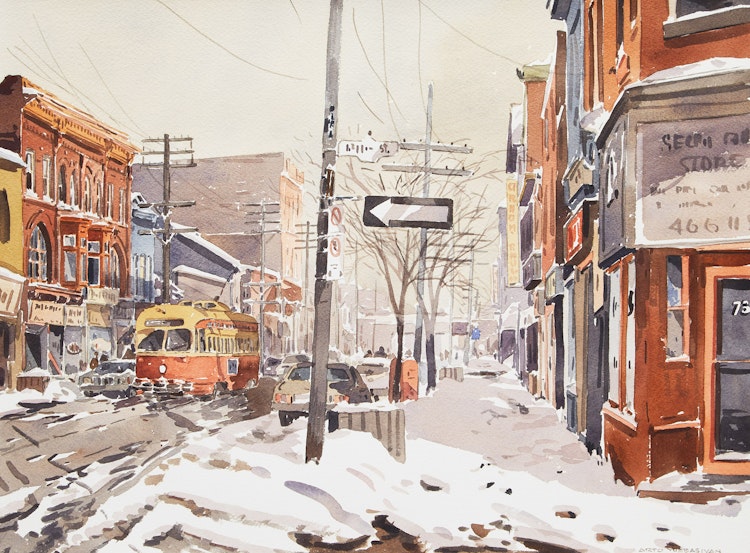
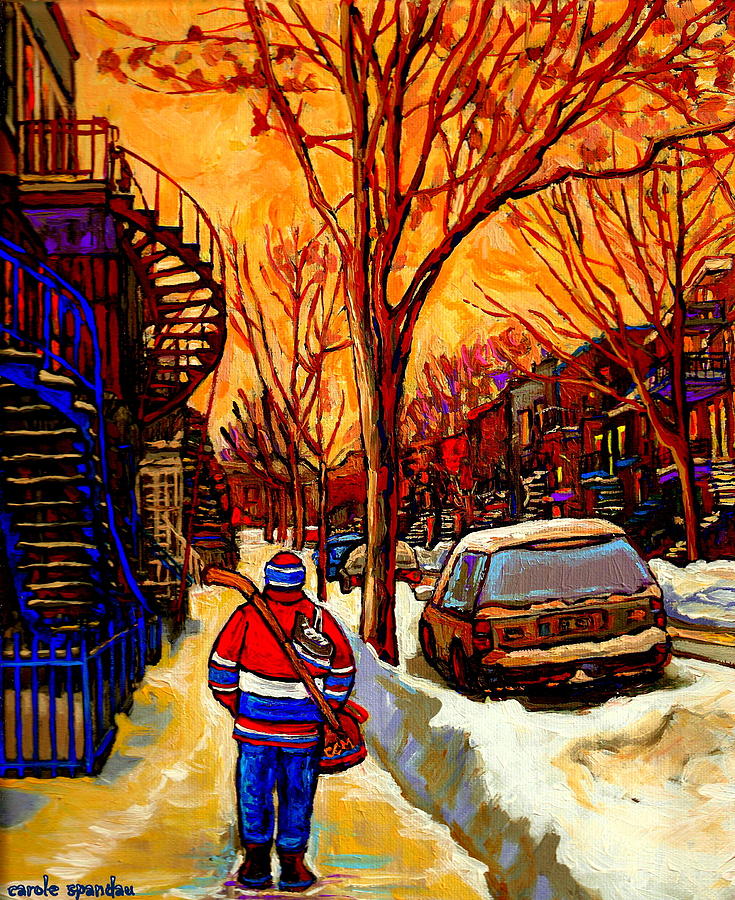
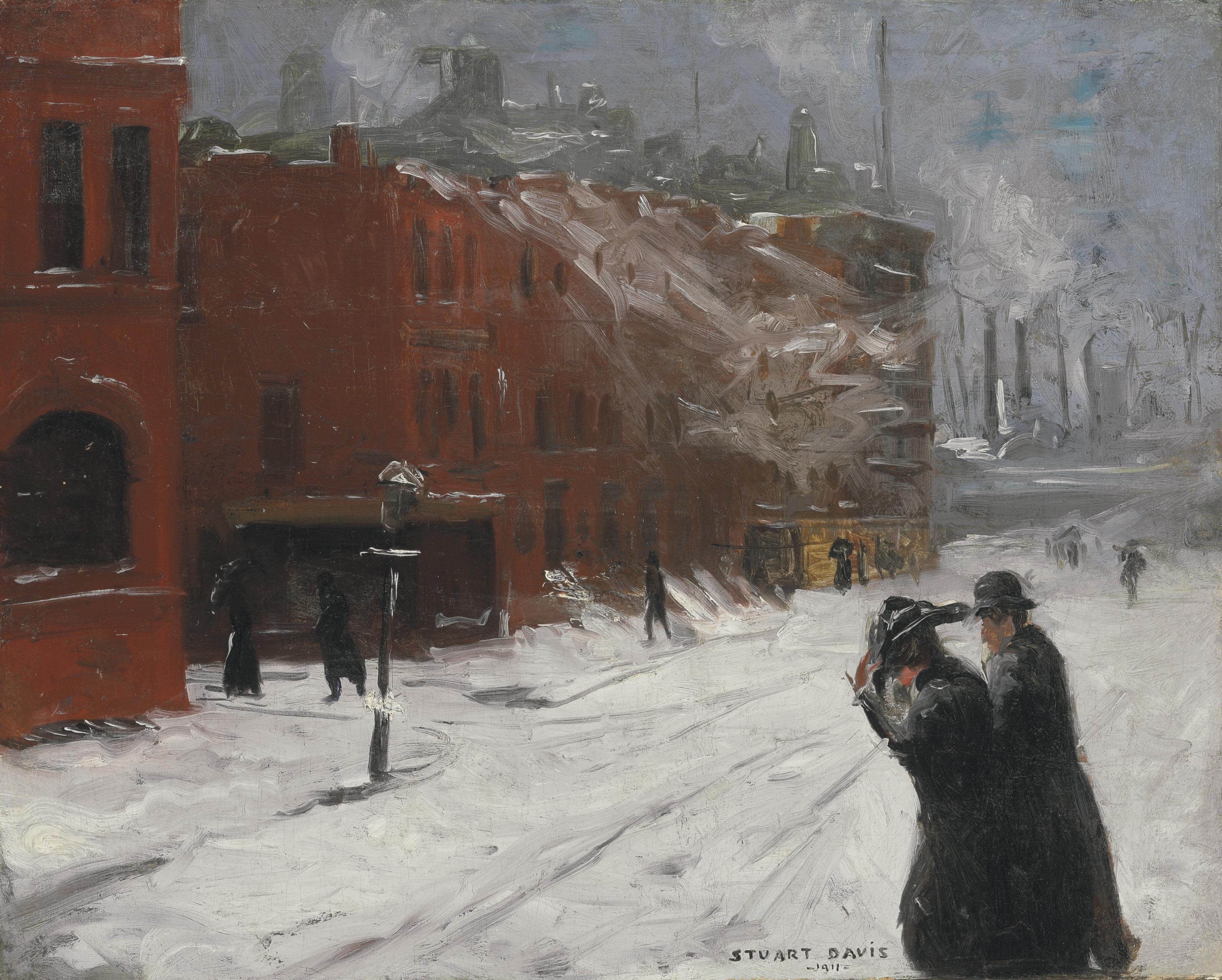
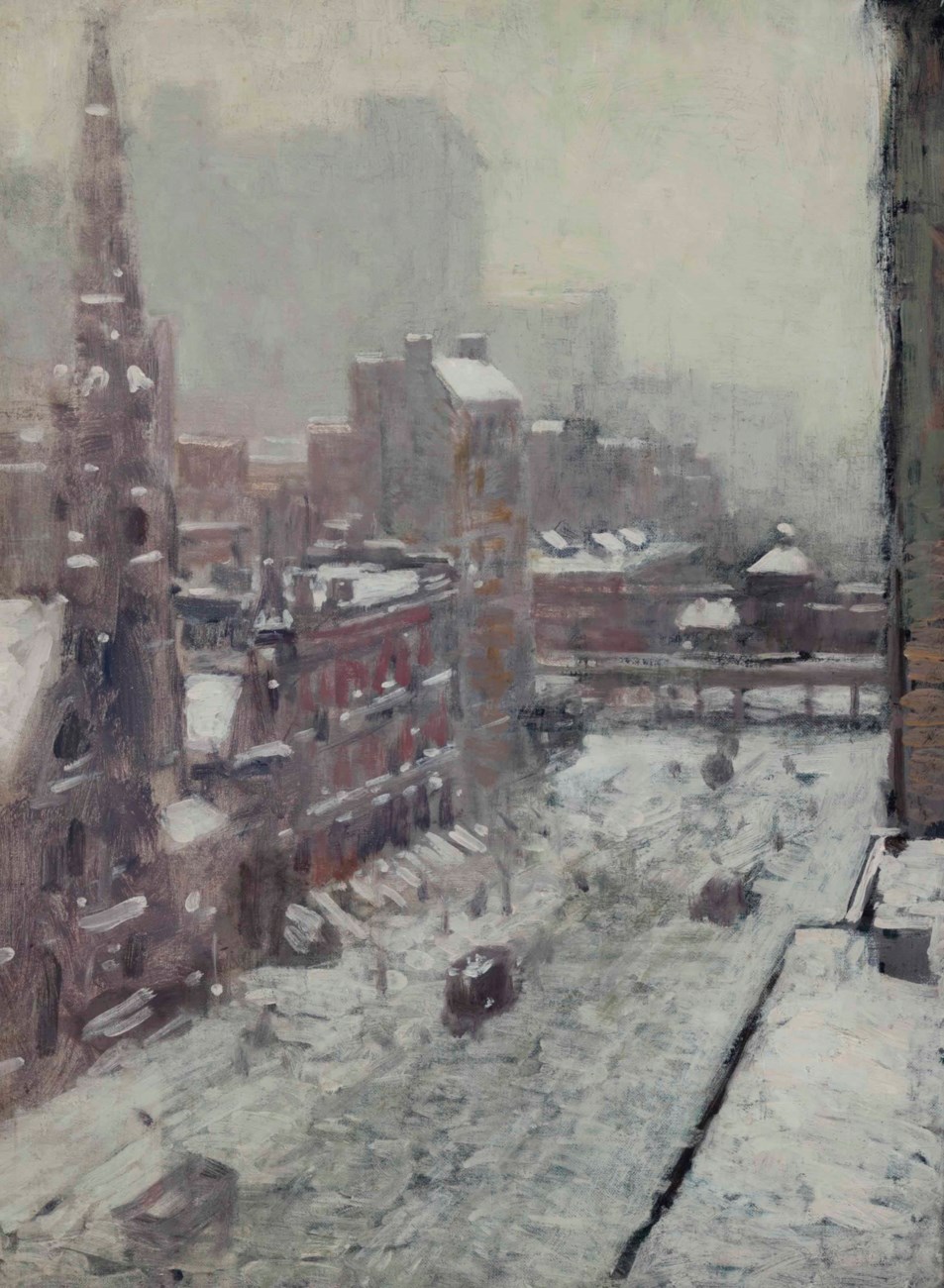
City Snow Scenes
If I was rich enough to collect original art, I would focus on paintings showing cities in winter3. There is something special about snow in the city; even slushy sidewalks look good on canvas.
For example…..




The Lost Land
Anthony Etherin is a British poet whose work follows strict rules of construction, such as palindromes and anagrams. It is all technically impressive, but he has written one poem, The Lost Land that soars.
It is a sonnet where the first 8 lines (known as the octave) follow a Shakespearean rhyming scheme: ABAB CDCD, and the final 6 lines (the sestet) follow a Petrarchan scheme: EFG EFG4. The whole piece is written in anapaestic pentameter, which means that the meter of each line follows a simple da da DUM pattern repeated 4 times (like a hymn or a nursery rhyme)5. The first two syllables are unstressed, and the third is stressed.
Now comes the cool part! The first letter of each stressed syllable (the DUM part), follows a pattern defined by √2. Since the square root of two is 1.414213…, this means that the first letter of the first stressed syllable isn’t repeated, but the first letters of the next 4 stressed syllables are the same. The next stressed syllable isn’t repeated, followed by another 4 alliterative stressed syllables, then 2, then 1 and so on6.
This all sounds highly mechanical, but just read this. I think it is brilliant.
I awake on the rocks, in the wreckage and rain-
while the rest of my brethren lie dead in the deep-
and I drag myself down from the mouth of the main
to the dunes, where a symphony stirs from its sleep:

All the flowers are feathered with flickers of flame,
and the ferns and the sands full of sulphurous stones.
Crimson serpents encircle the spiralling frame
of a fungal abundance; a bundle of bones.

And from far in the forest, a falconet flies
past the face of a figure confined to the rocks:
in the red stone, a reptile, a sculpture of sand,
stands in splendour, its sceptre outstretched to the skies....

Under sibilant sunrays, a secret unlocks,
casting light on a life ever lost to this land.
- Canadian Broadcasting Corporation, the government’s propaganda channel. ↩︎
- Infamous for being a significant vector bringing COVID-19 to Australia. ↩︎
- Here in Canada, the really, really rich collect winter paintings, but of rural and wilderness scenes, not urban. See the Thompson Collection at the Art Gallery of Ontario. ↩︎
- Yeah, I didn’t know any of this stuff either. Major kudos to Wikipedia for the explanation of the poetic terminology. ↩︎
- More stuff I had to learn to write this post. ↩︎
- Maybe this will help: wake (1)—rocks, wreck, rain, rest (4)— breth (1)—dead, deep, drag, down (4)—mouth main (2)… ↩︎

A diverse and rewarding read/look Stu – most welcome in the long month of January! Thanks for compiling. Sean
Thanks Sean. Nice to hear from you.