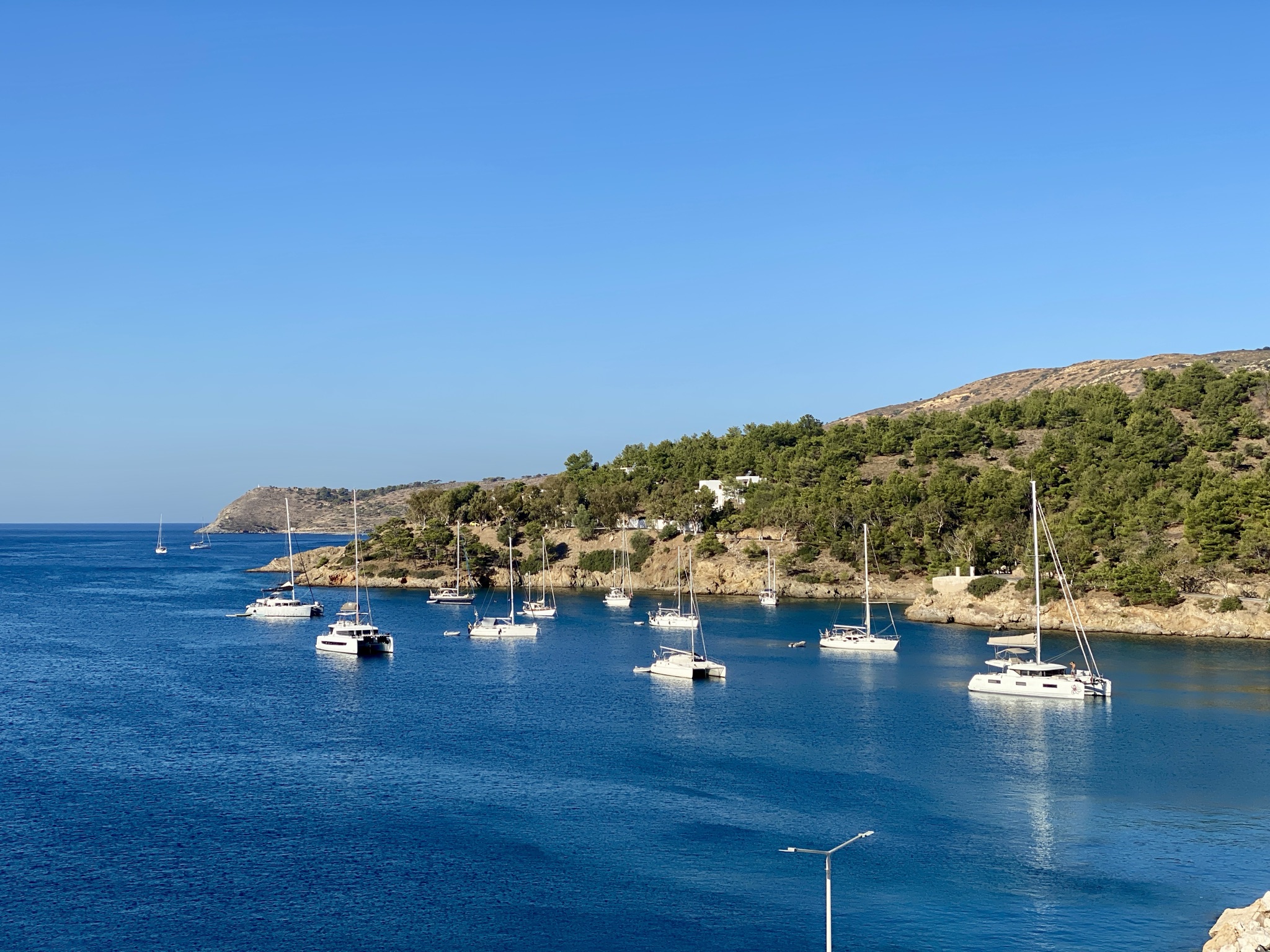
I am so happy we/Heidi chose to visit Paros rather than other more famous Greek islands. It is lovely.
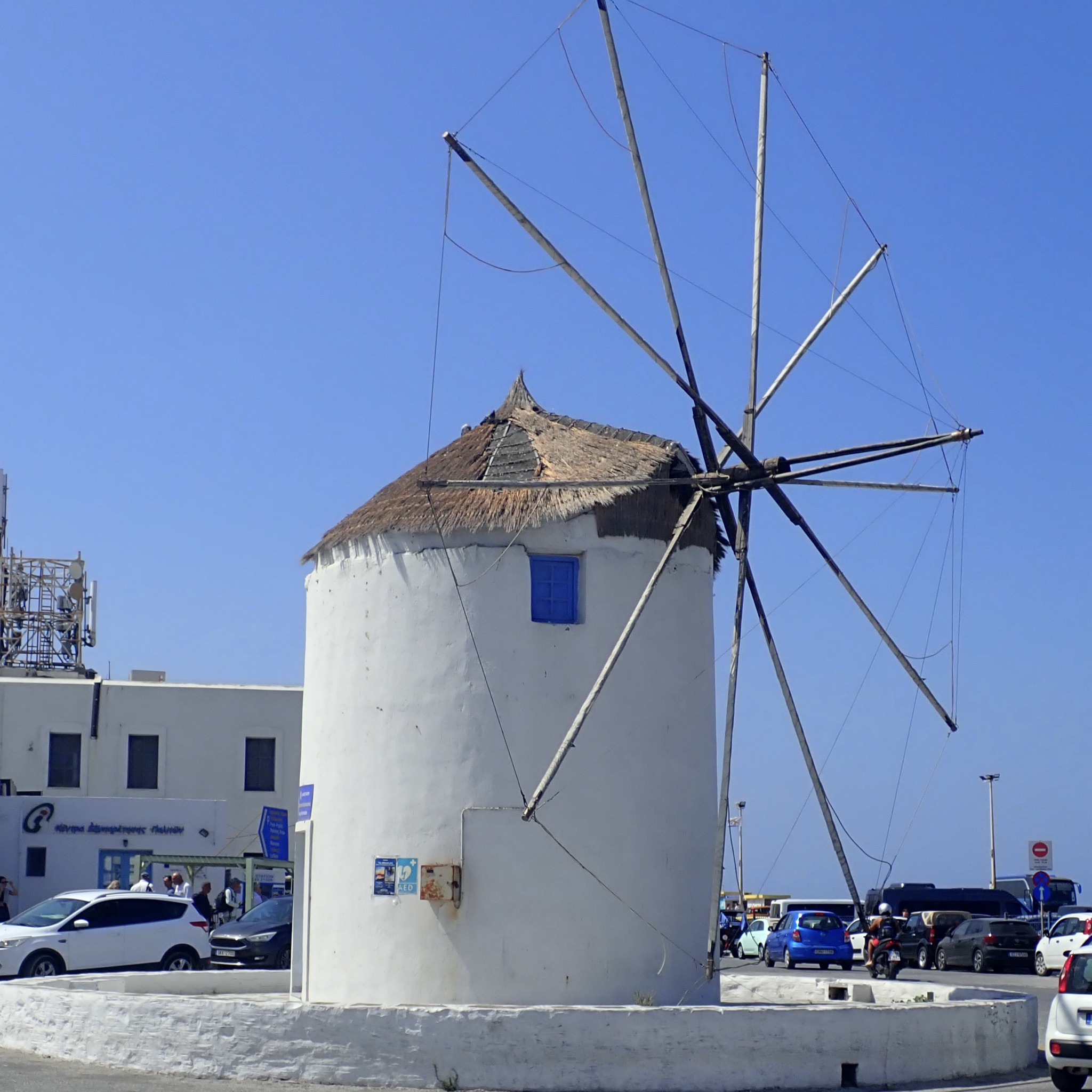
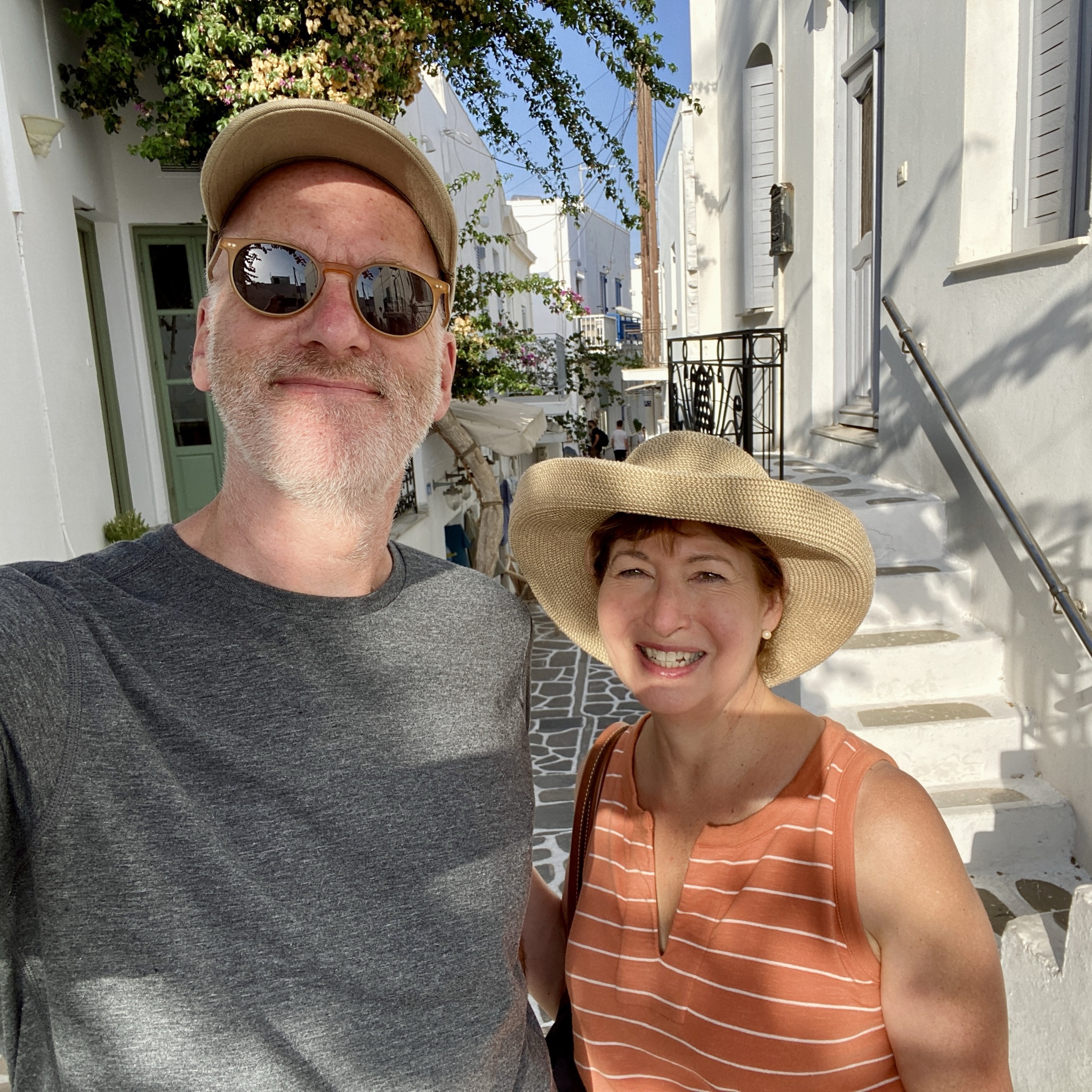
We stayed in Parikia, a charming port that manages to be both a gaudy beach town and a pretty old Mediterranean village, with whitewashed alleyways, covered at this time of year with bougainvillea blooms.
It attracts lots and lots of tourists, but doesn’t feel overrun, yet.
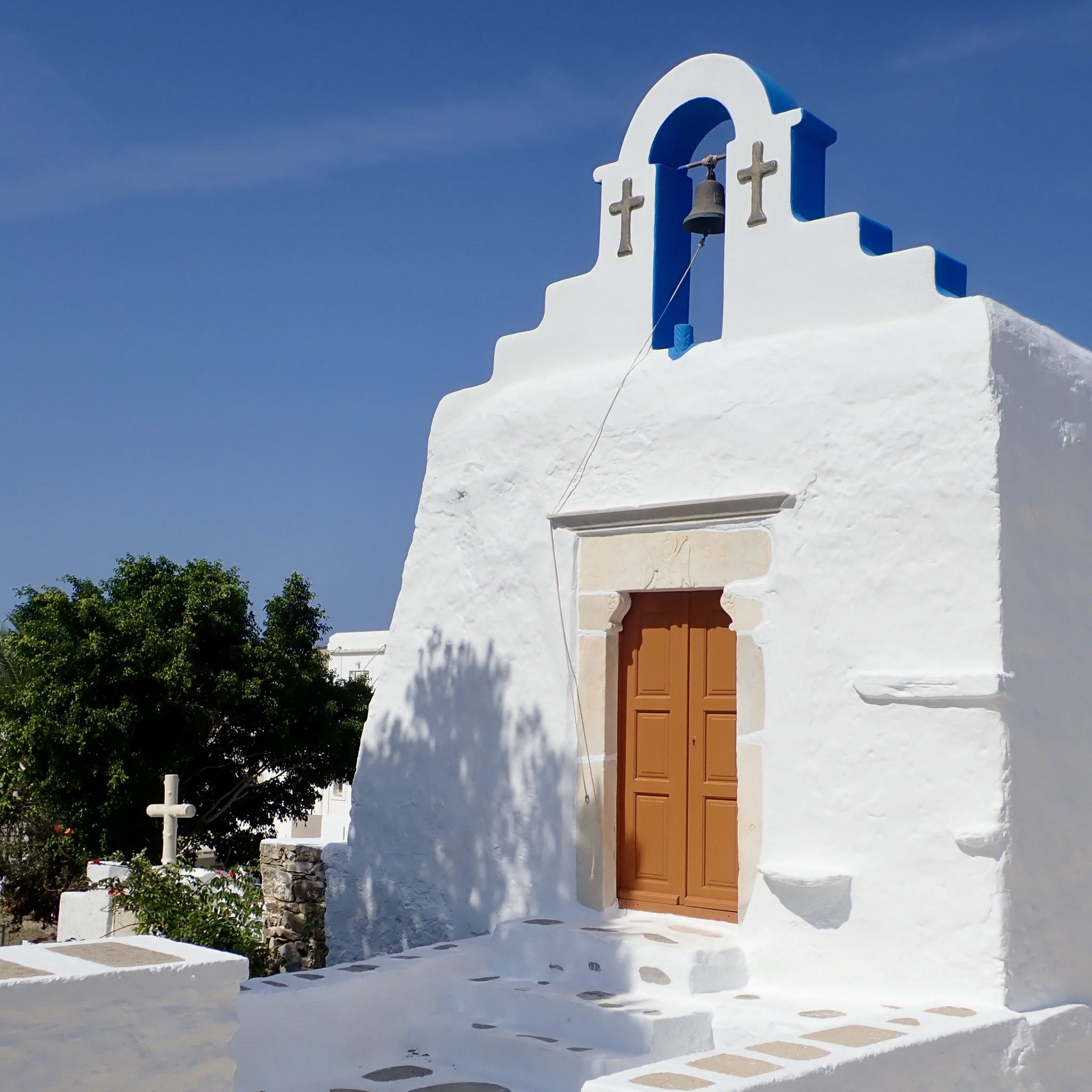
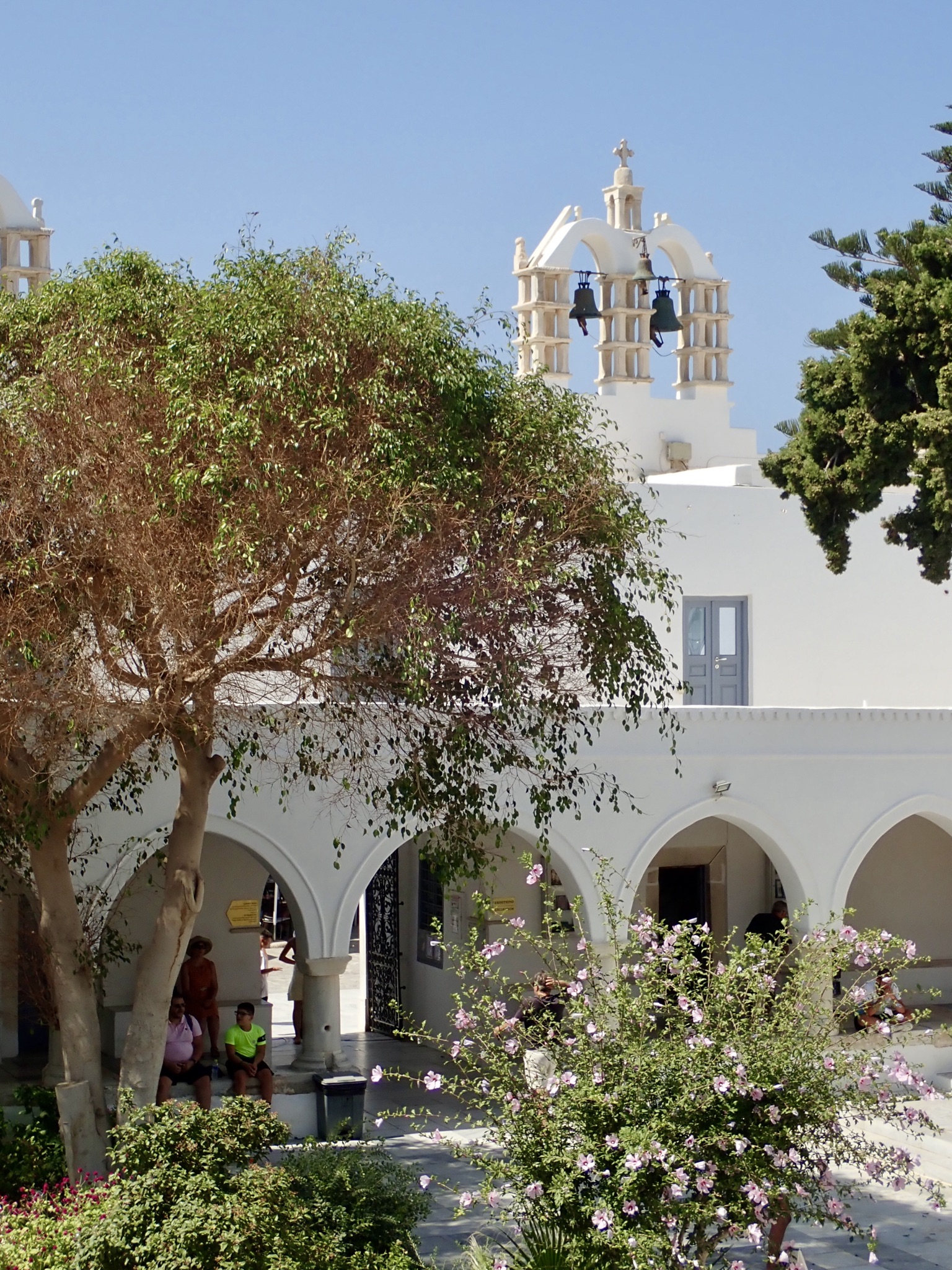
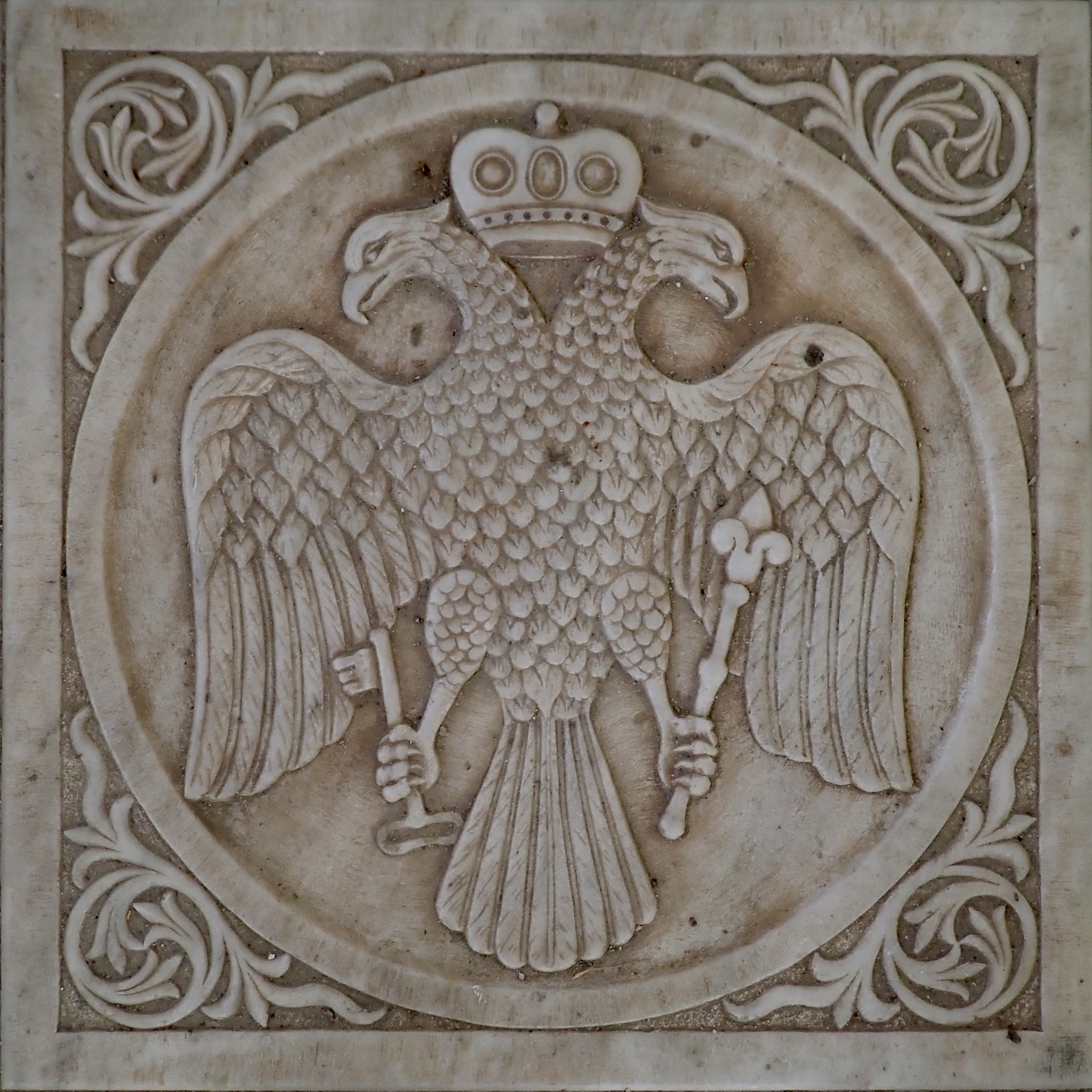
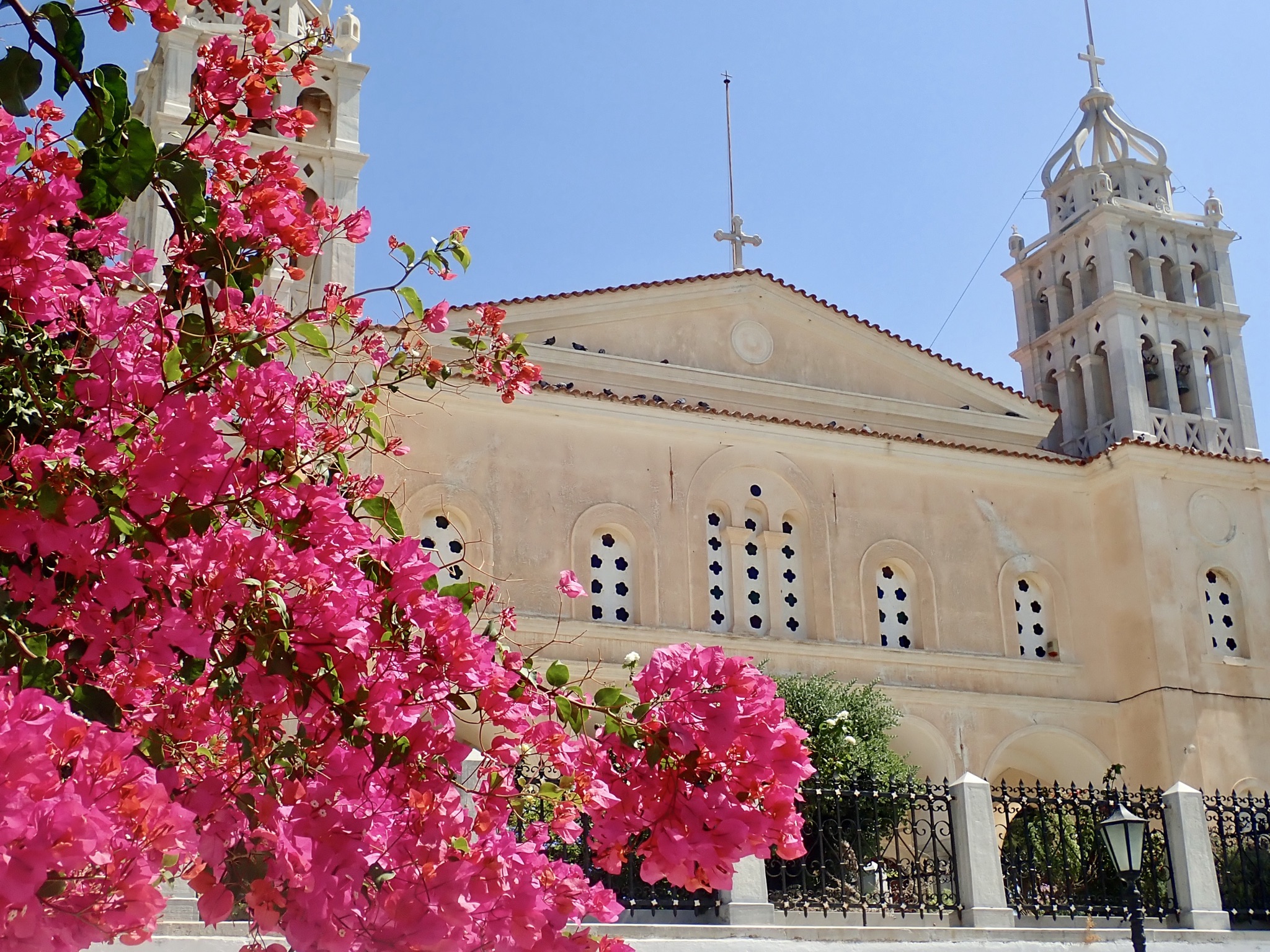
Just off the main square is the Panagia Ekatontapiliani , which means the church of 100 doors, but there are nowhere near 100 doors. It’s a mystery. The church was originally built in 326 CE, supposedly by the mother of Constantine the Great, and has been very nicely restored. Others credit construction to Eastern Roman emperor Justinian. Another mystery.
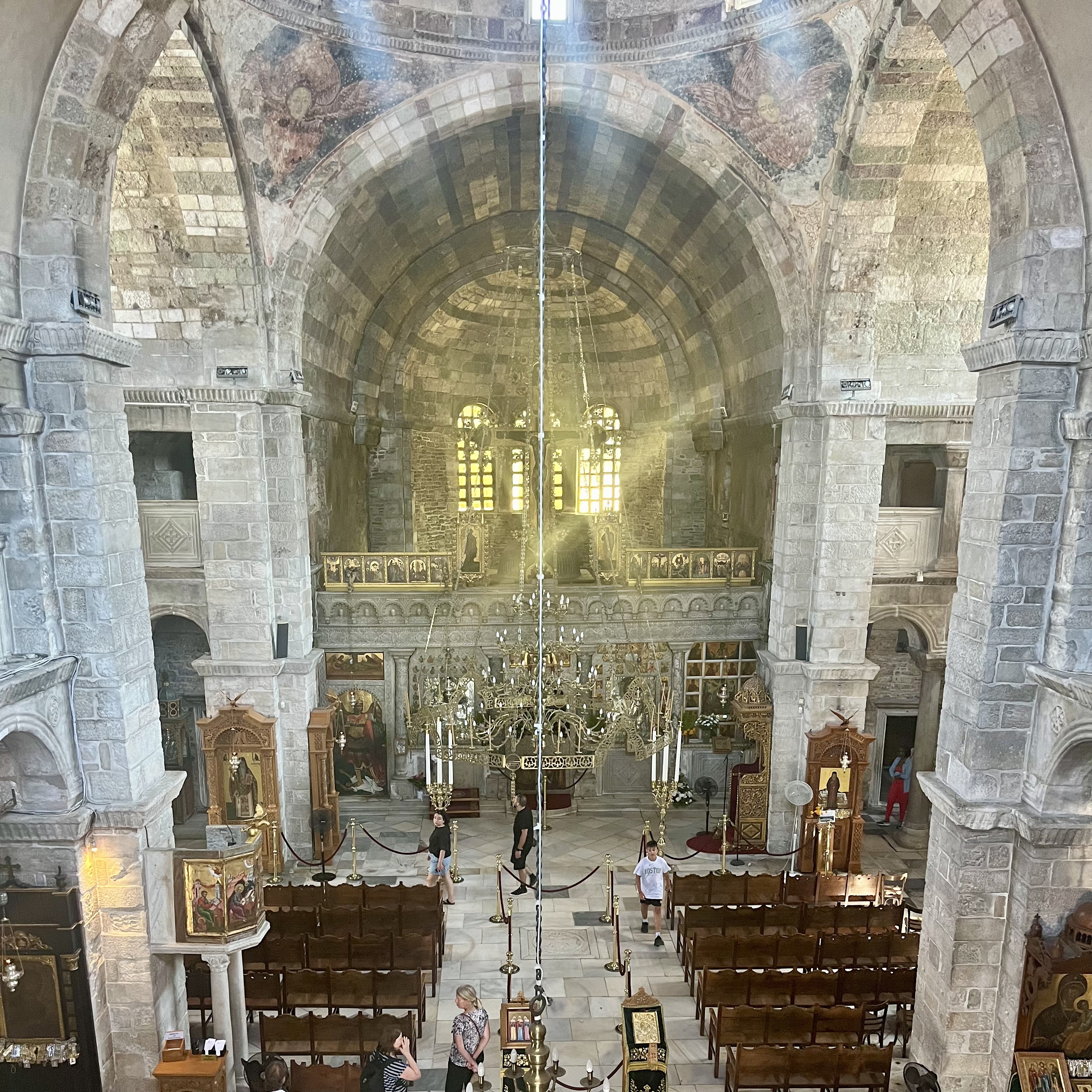
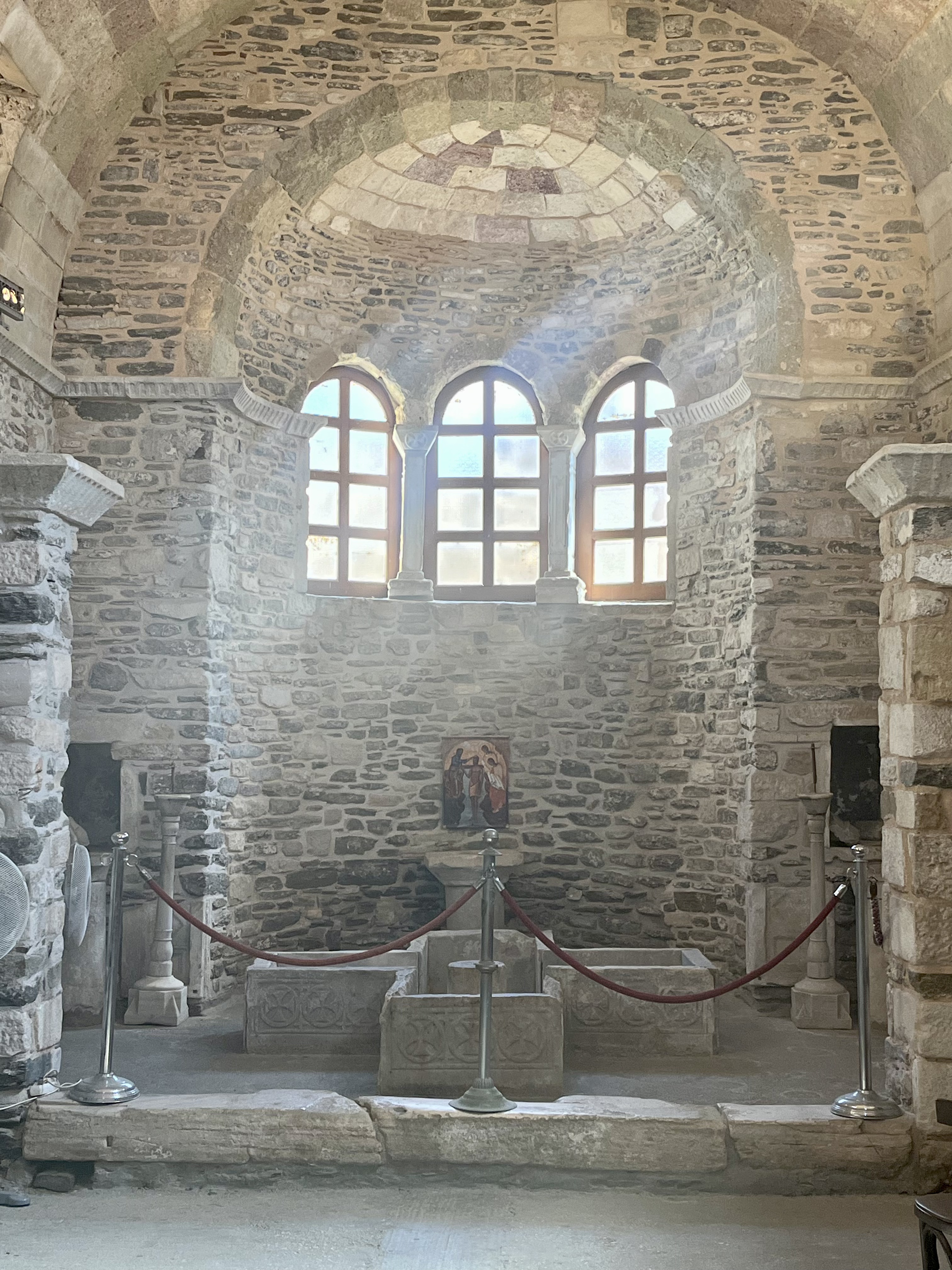
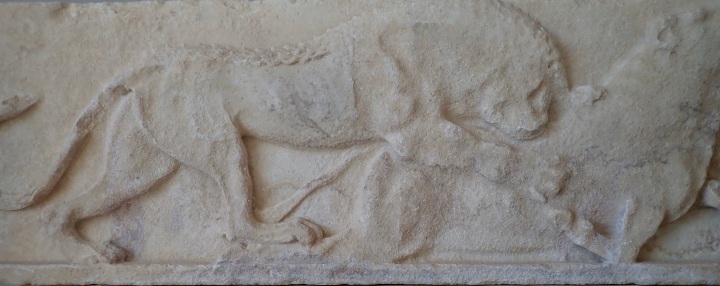
I found the Archeological Museum in Parikia more interesting than the one in Athens even though it is much smaller. Here’s the example: a partial statue of a sphinx, and a very disturbing description (from Wikipedia) of its nature in Greek mythology.
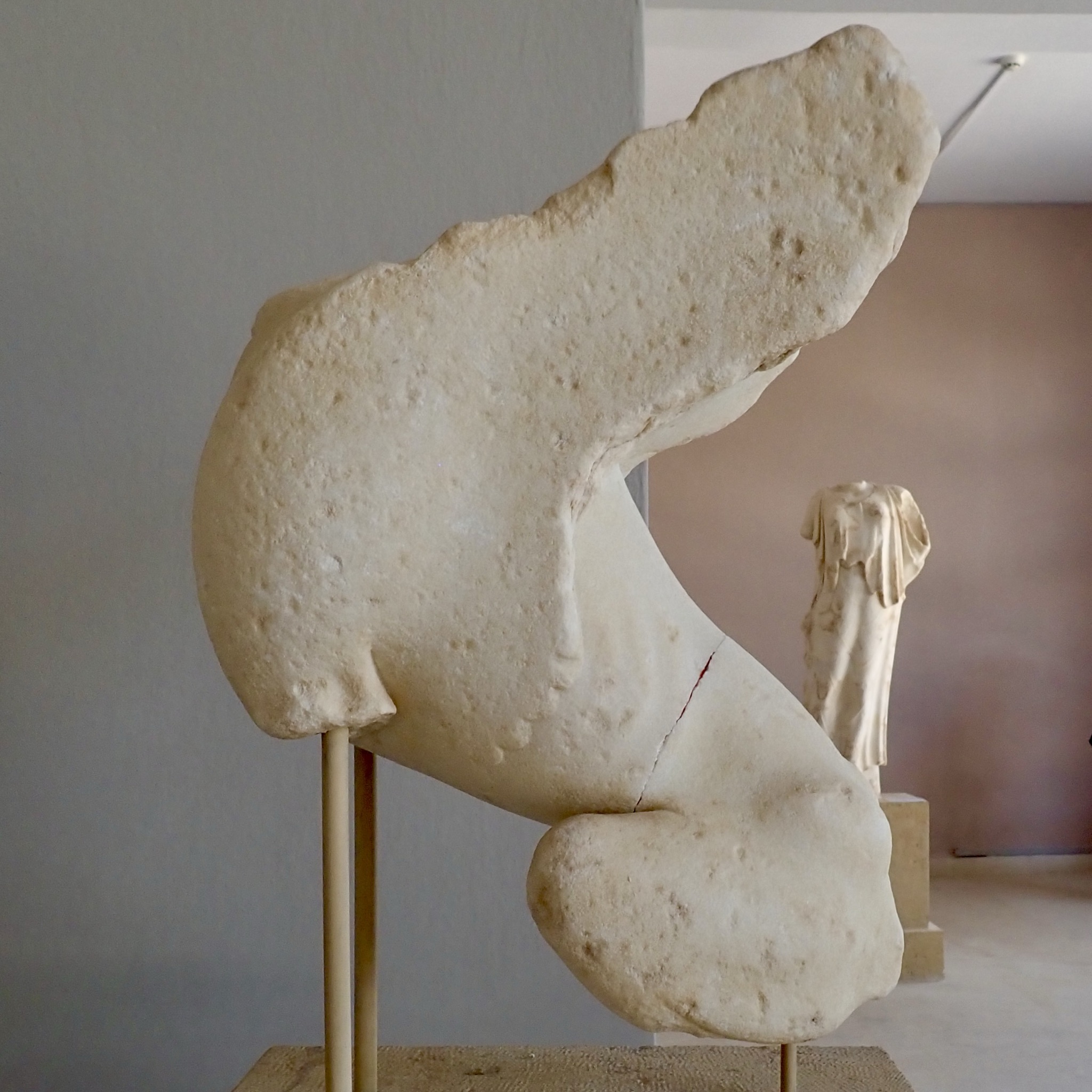
In Greek tradition, the sphinx is a treacherous and merciless being with the head of a woman, the haunches of a lion, and the wings of a bird. According to Greek myth, she challenges those who encounter her to answer a riddle, and kills and eats them when they fail to do so
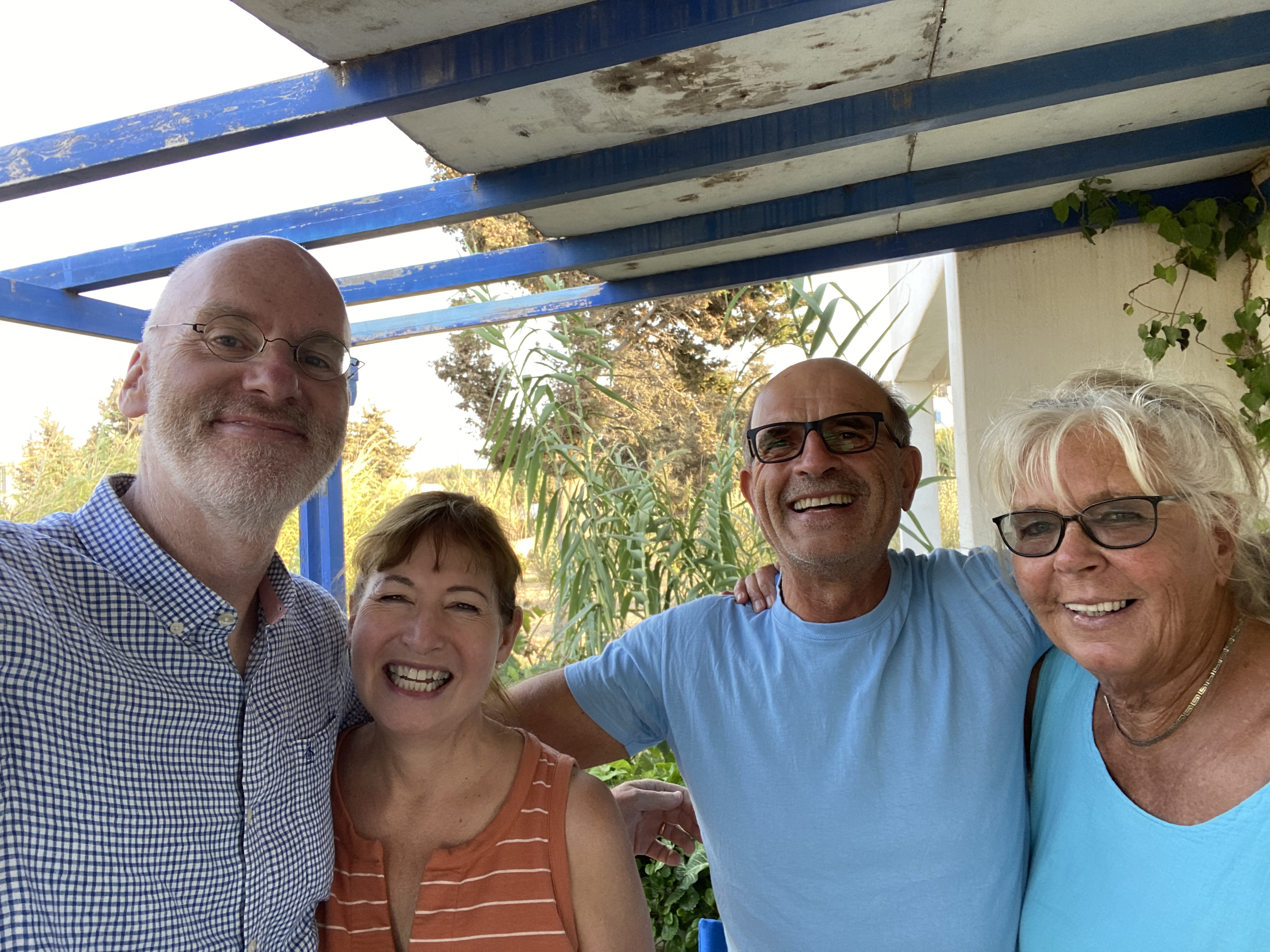
During our stay, we met Heidi’s cousin, Ingrid and her husband, Stavros (who live there) and had a most enjoyable dinner near Pisa Livadion.
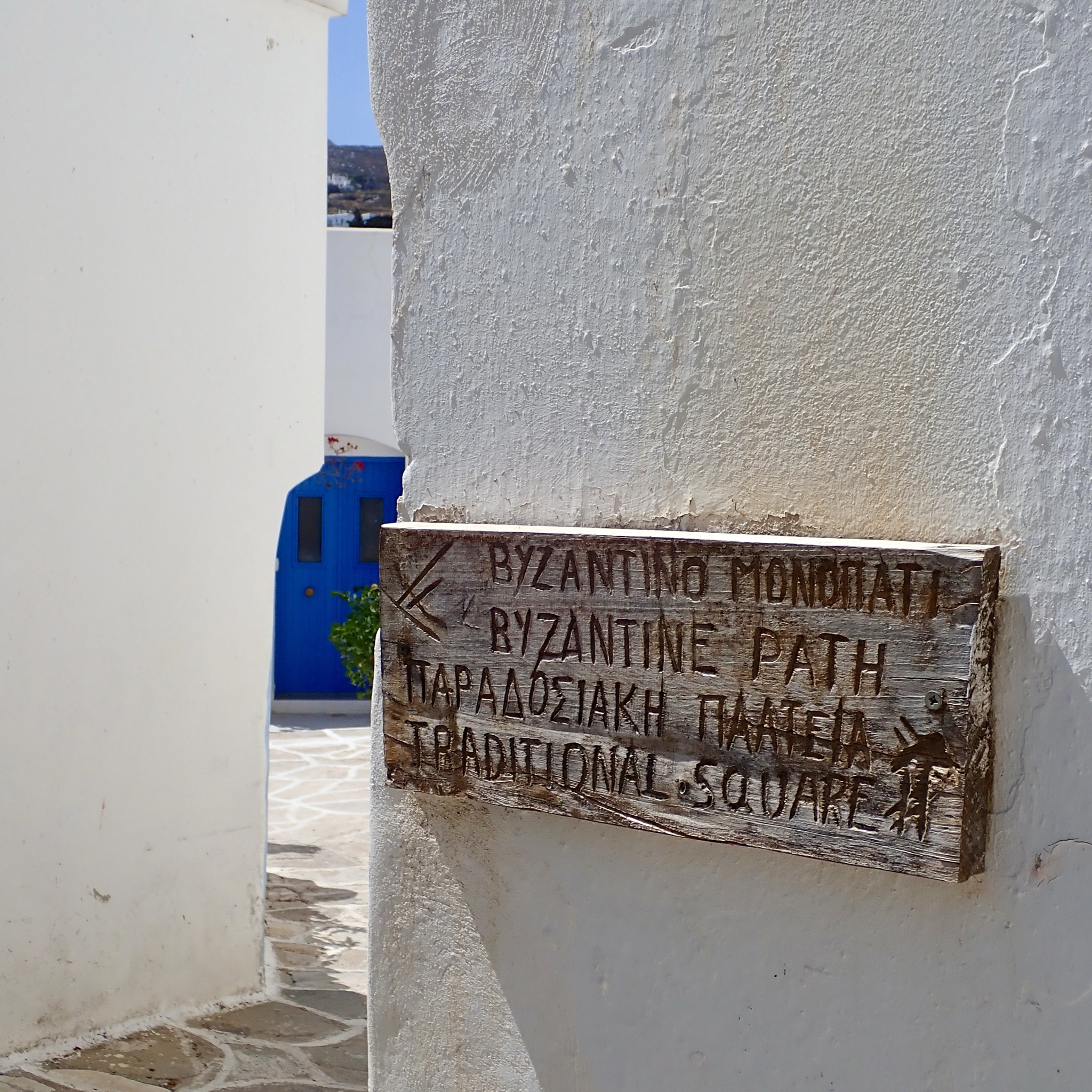
There is an old path across part of the island that goes between the villages of Lekfes and Prodromos, and which dates back to Byzantine times. Not surprisingly it is called the Byzantine Road and it is still mostly paved with marble.
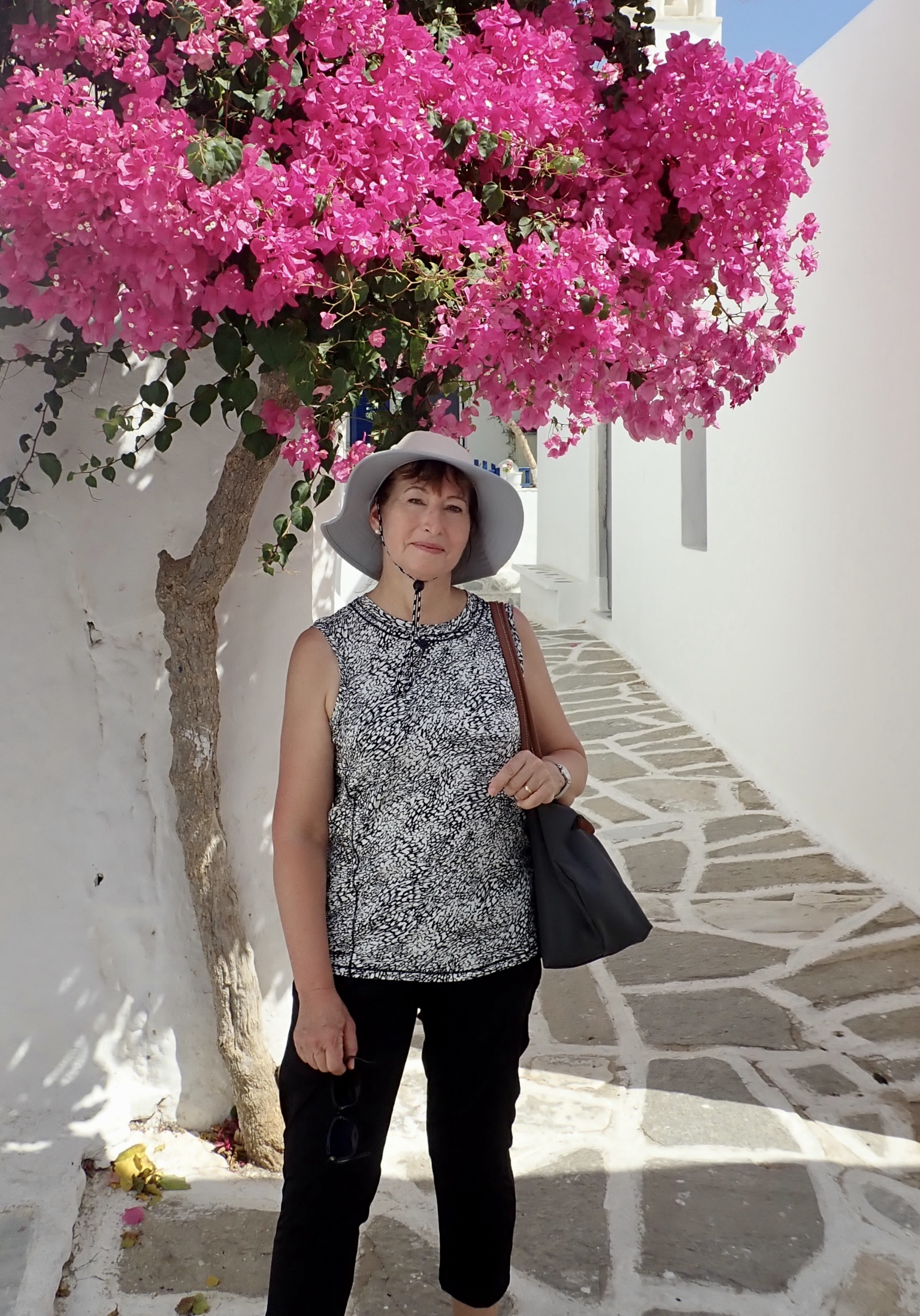
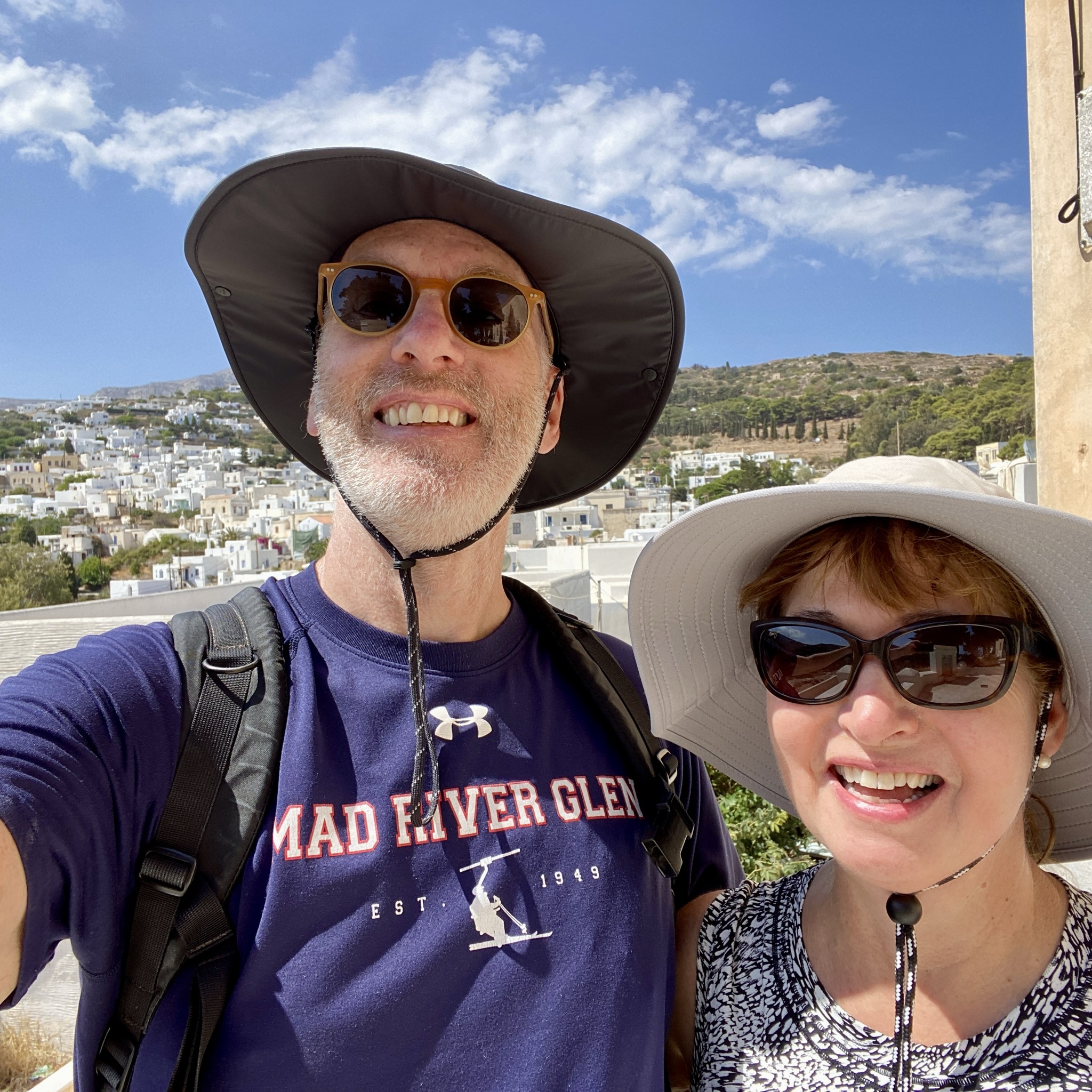
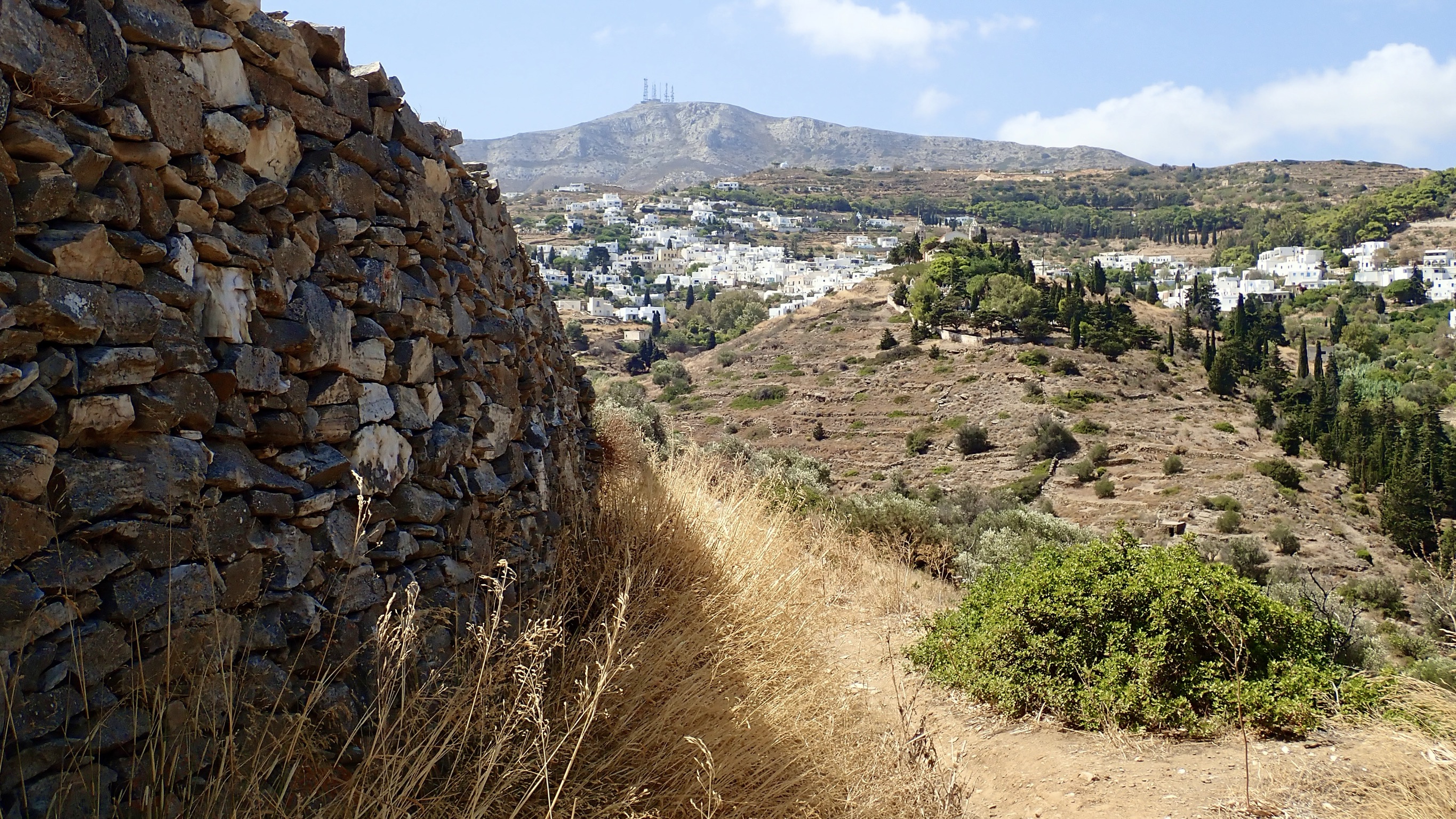
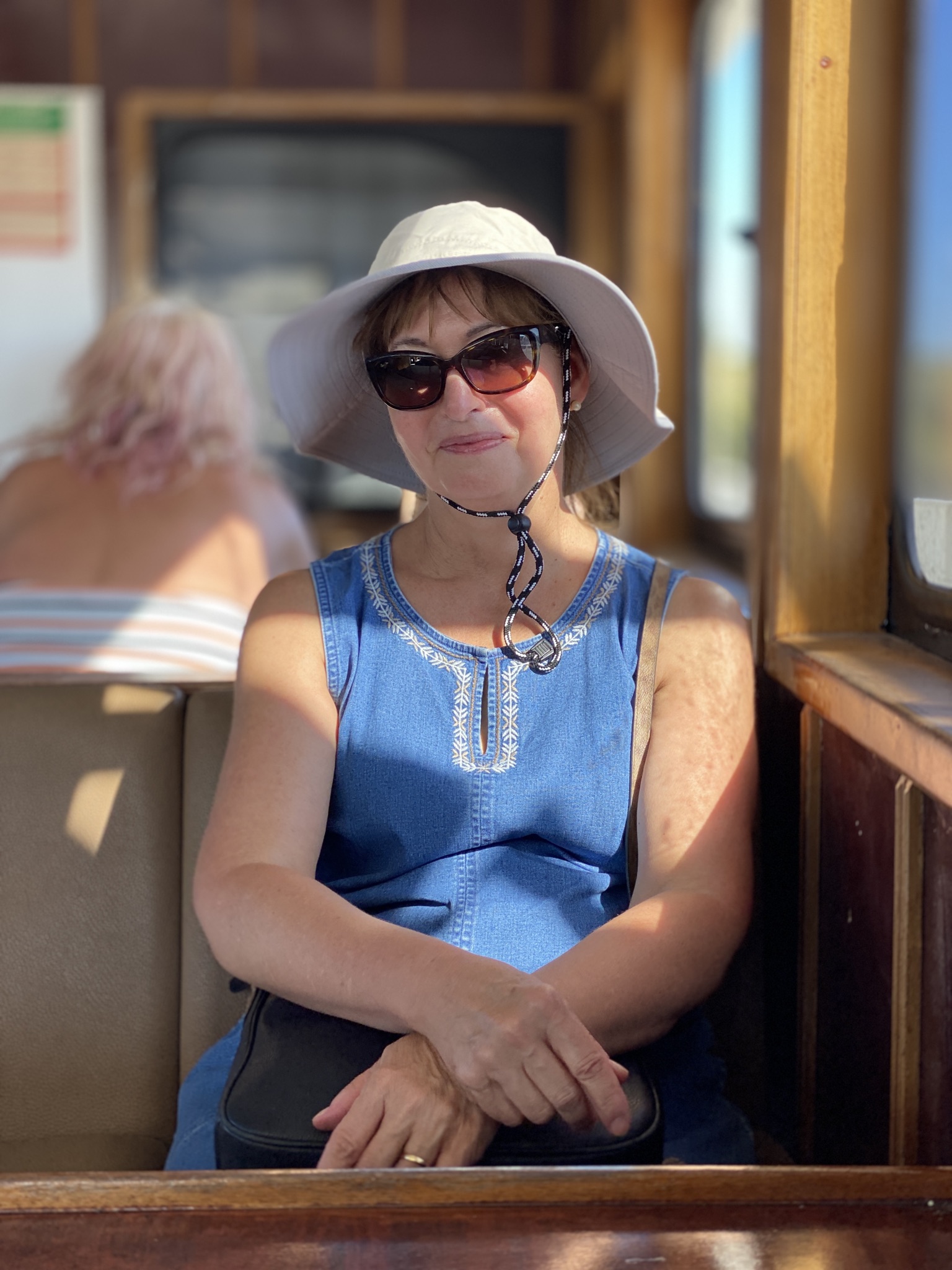
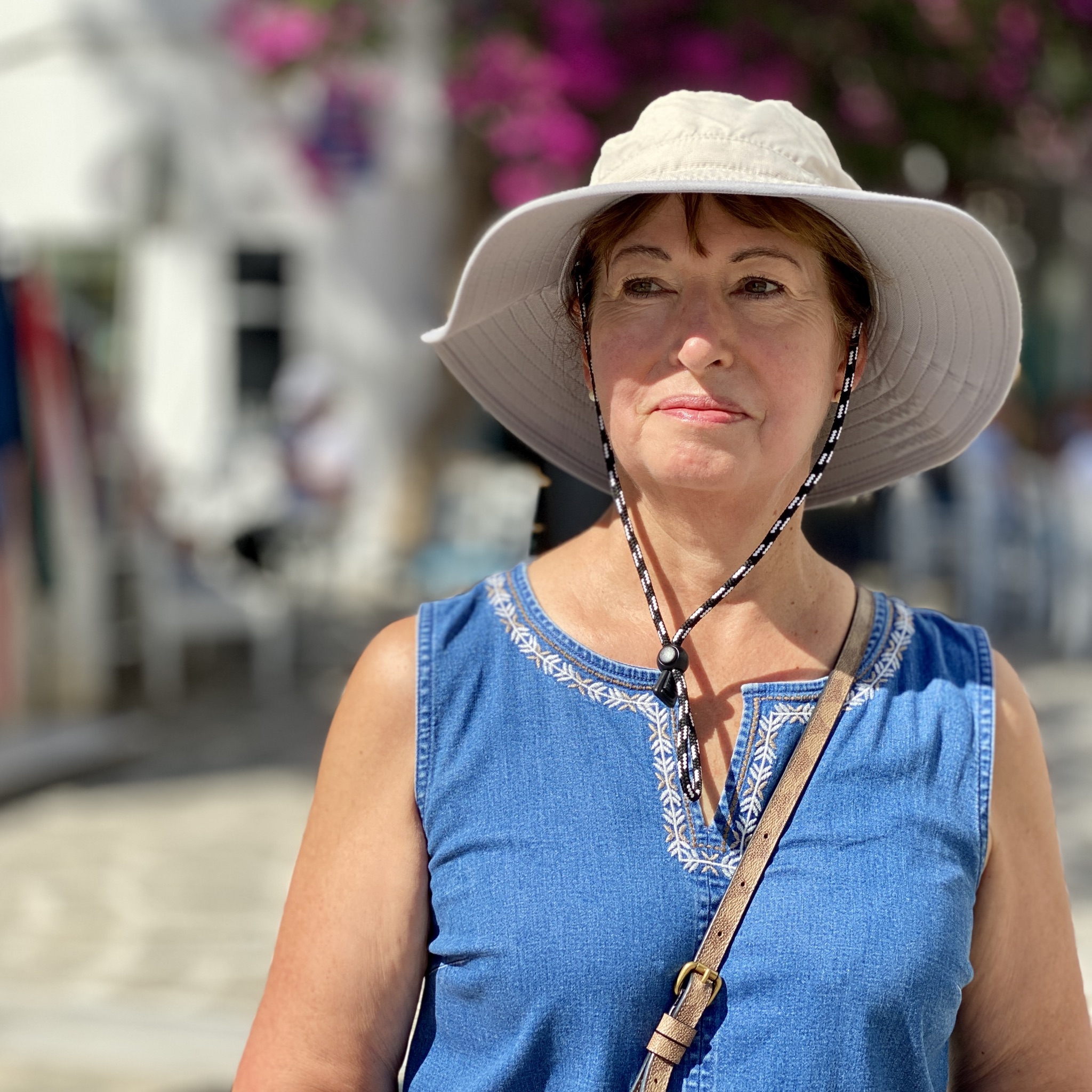
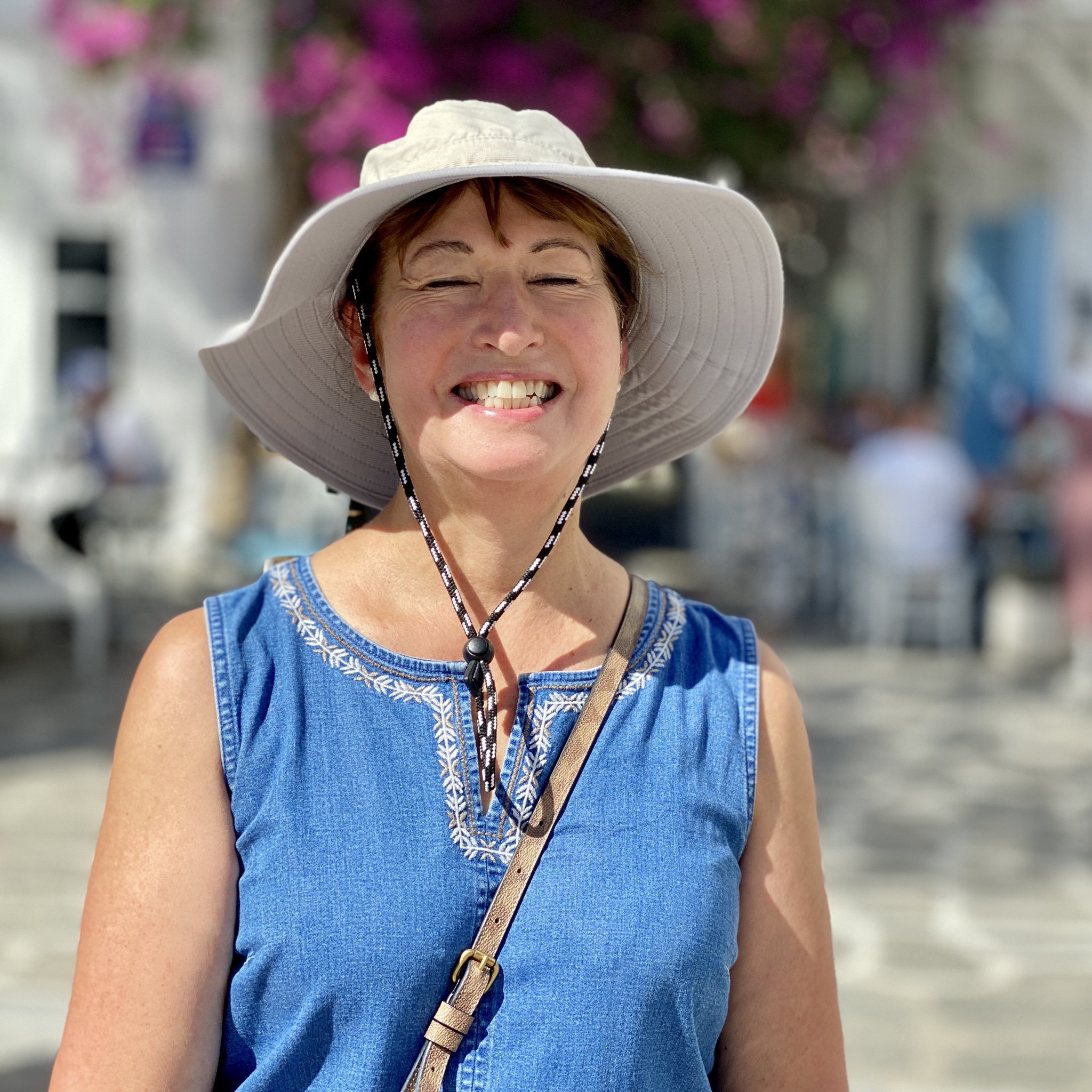
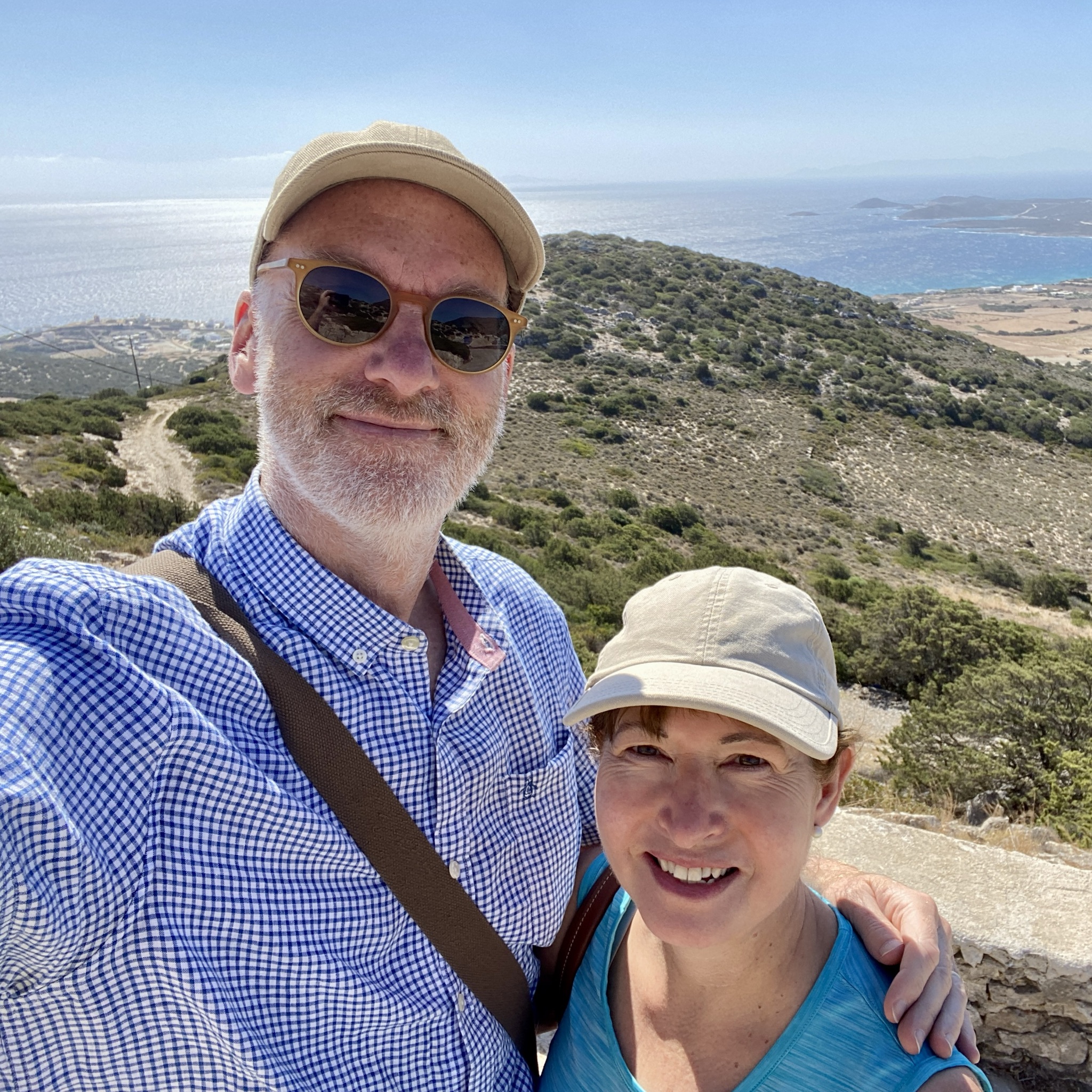
If you have any thoughts about my choice in sun-protective headgear, please keep them to yourself. I am well aware how goofy it looks.
The island of Antiparos is adjacent to Paros; it is smaller, and seems to be just a bit further under the radar. It supported my thesis that any place a random person on the street in North America has heard of is likely to be overrun with tourists and its best to go somewhere else, like Antiparos.
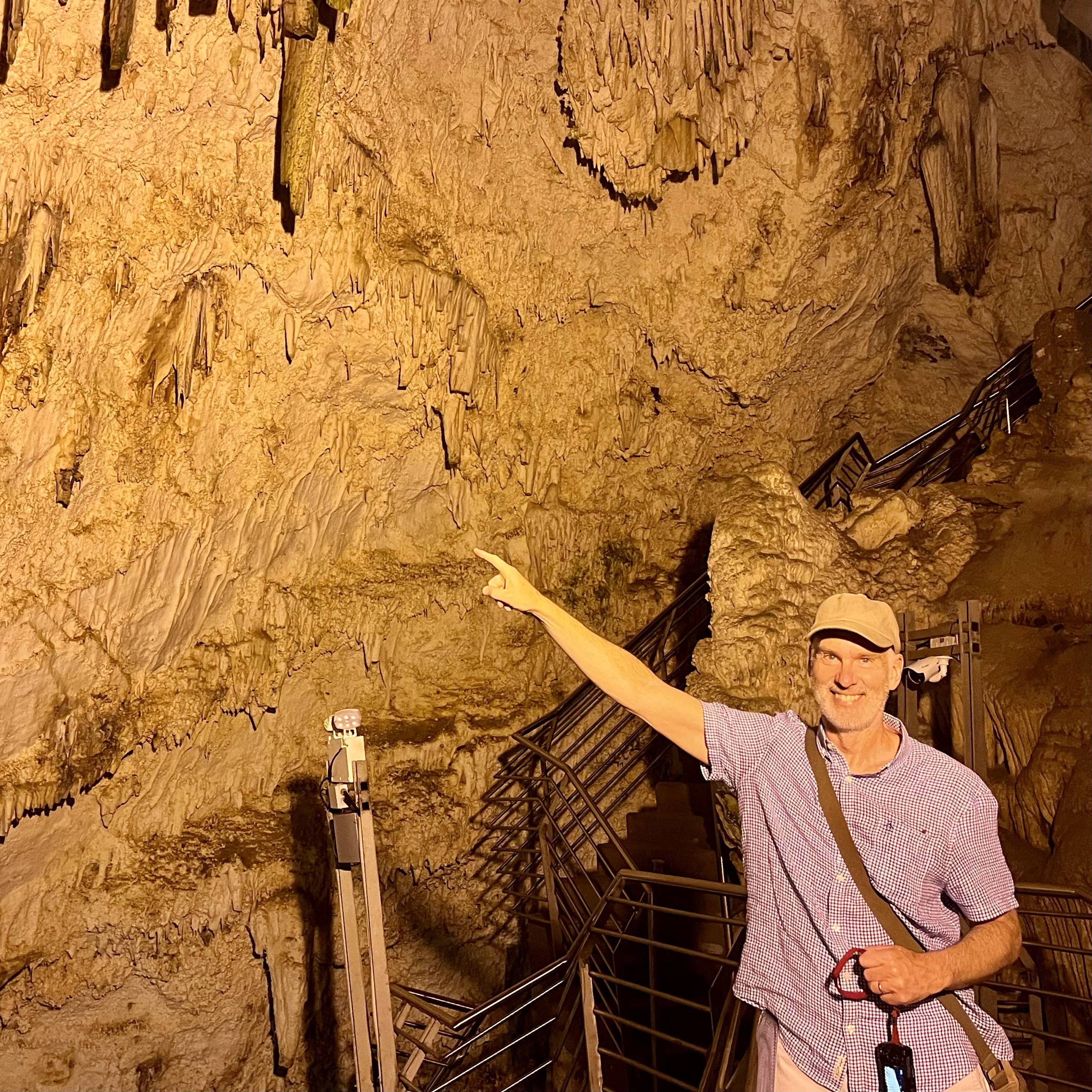
There is a pretty impressive cave, with the oldest stalagtite in Europe, and you can descend to the bottom (we did), but that means that you also have to climb back up. The nice guy at the ticket booth gave me a senior’s discount, even though I was a couple of weeks early.
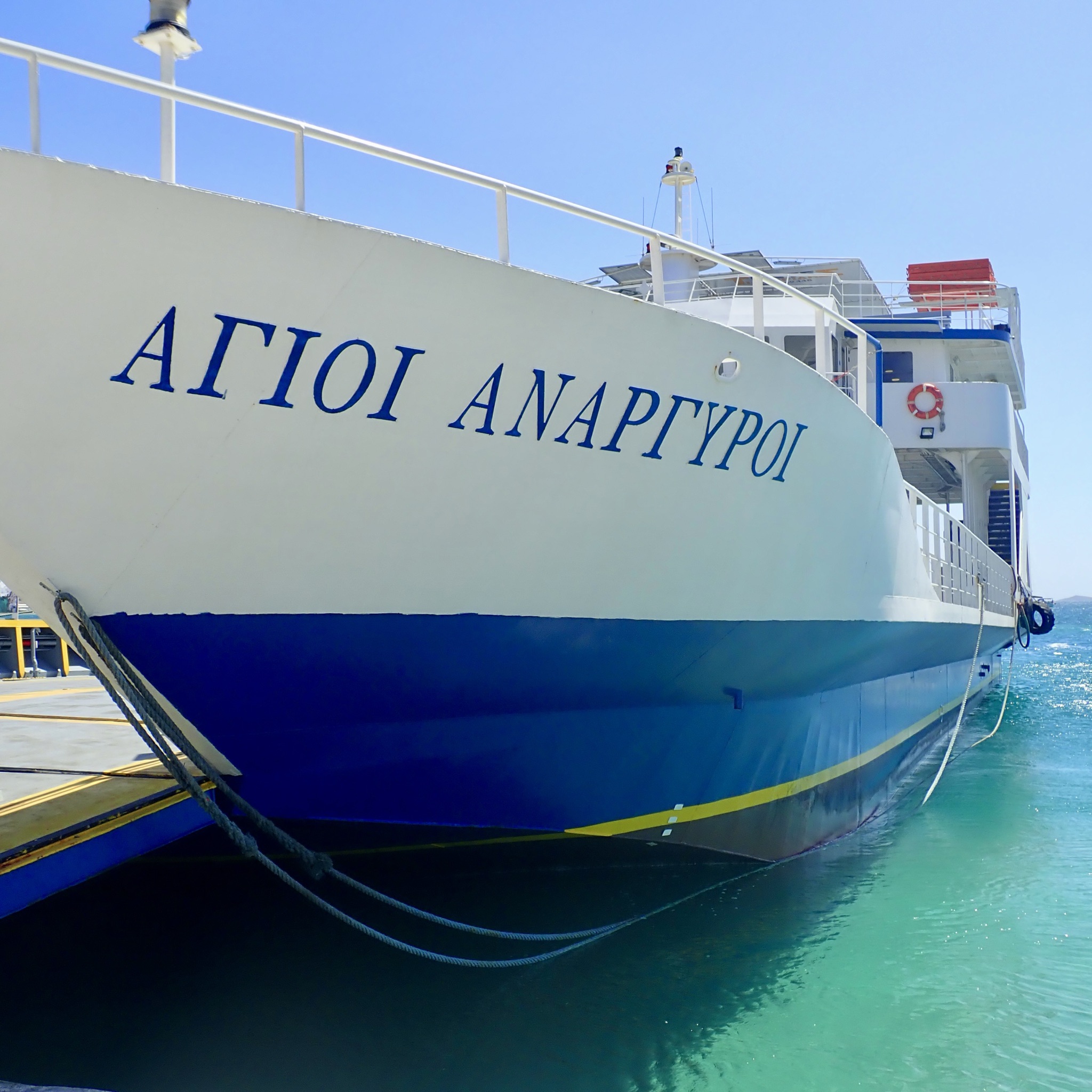
At the end of our stay in Paros we were joined by our friends Bogie and Angela, and traveled with them to their place in Turkey.
Due to ferry routes and schedules there is no easy way to get to Turkey from Paros. It’s nearly a 24 hour voyage under normal conditions, and during our stay the ferry workers went on strike which delayed things by about 8 hours.
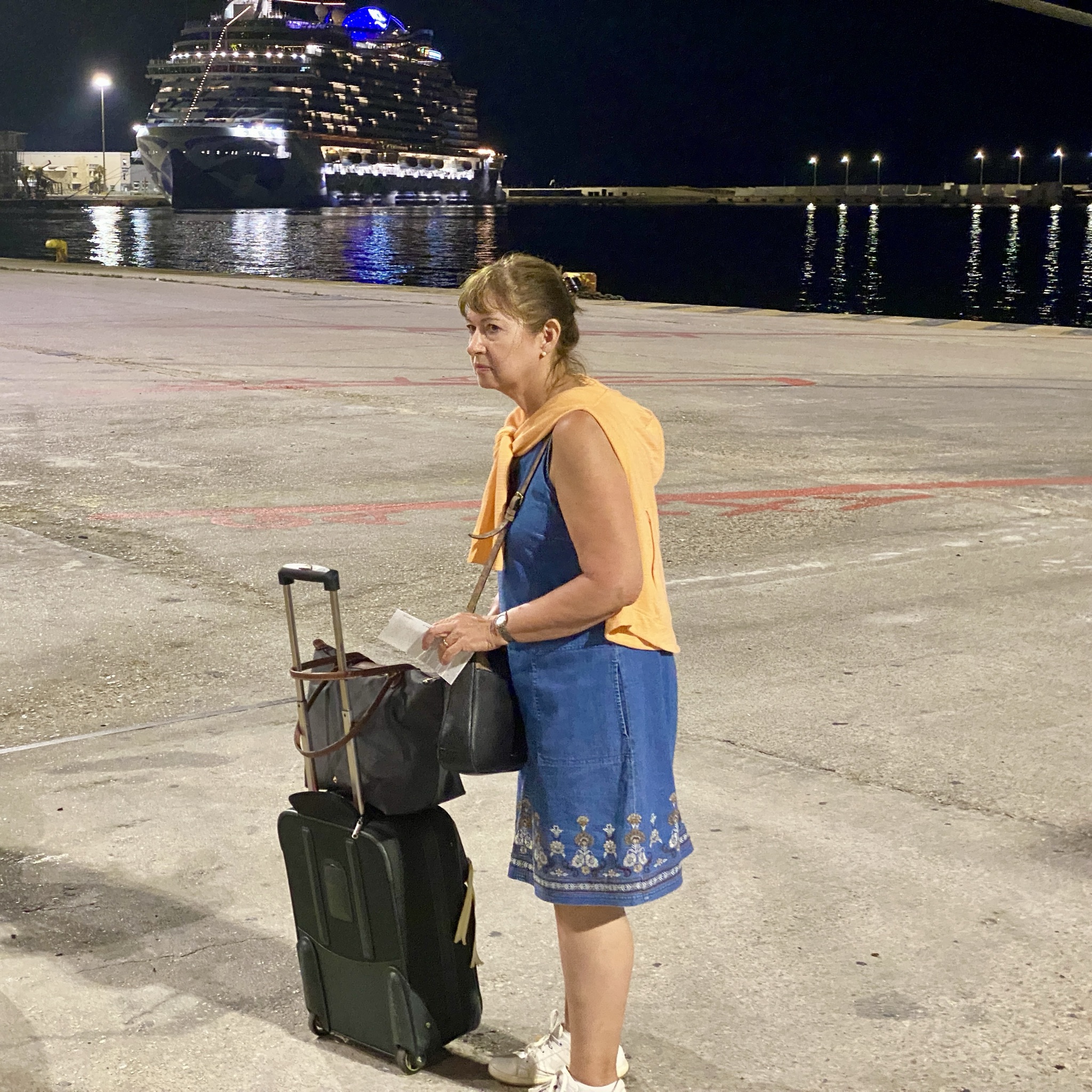
In the end, it all worked out. The first ferry deposited us, near midnight, at the massive Piraeus/Athens terminal and it took a bit of effort to locate the ferry for the overnight trip. When we did, I discovered that the cabin I had reserved was massive; bigger than some of our hotel rooms. I don’t remember how much I paid to upgrade from a cabin with bunk-beds, but it wasn’t much, and well worth it.
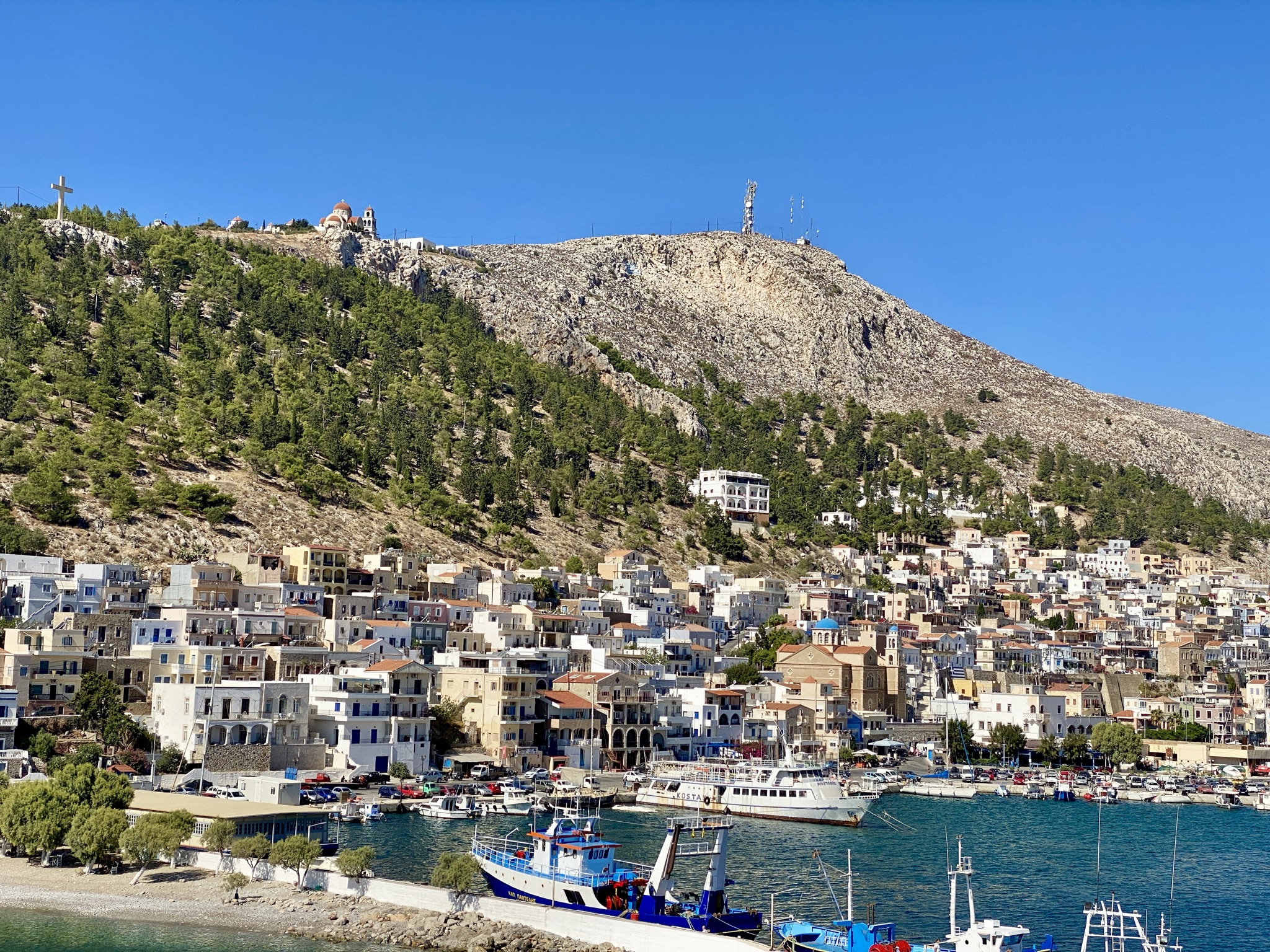
I really enjoy overnight trains and ferries. We woke, after a good sleep, just as the sun was rising and we were docking in the island of Leros. We had a leisurely breakfast as the ferry made its way to Kalymnos, and then Kos. It was quite luxurious.
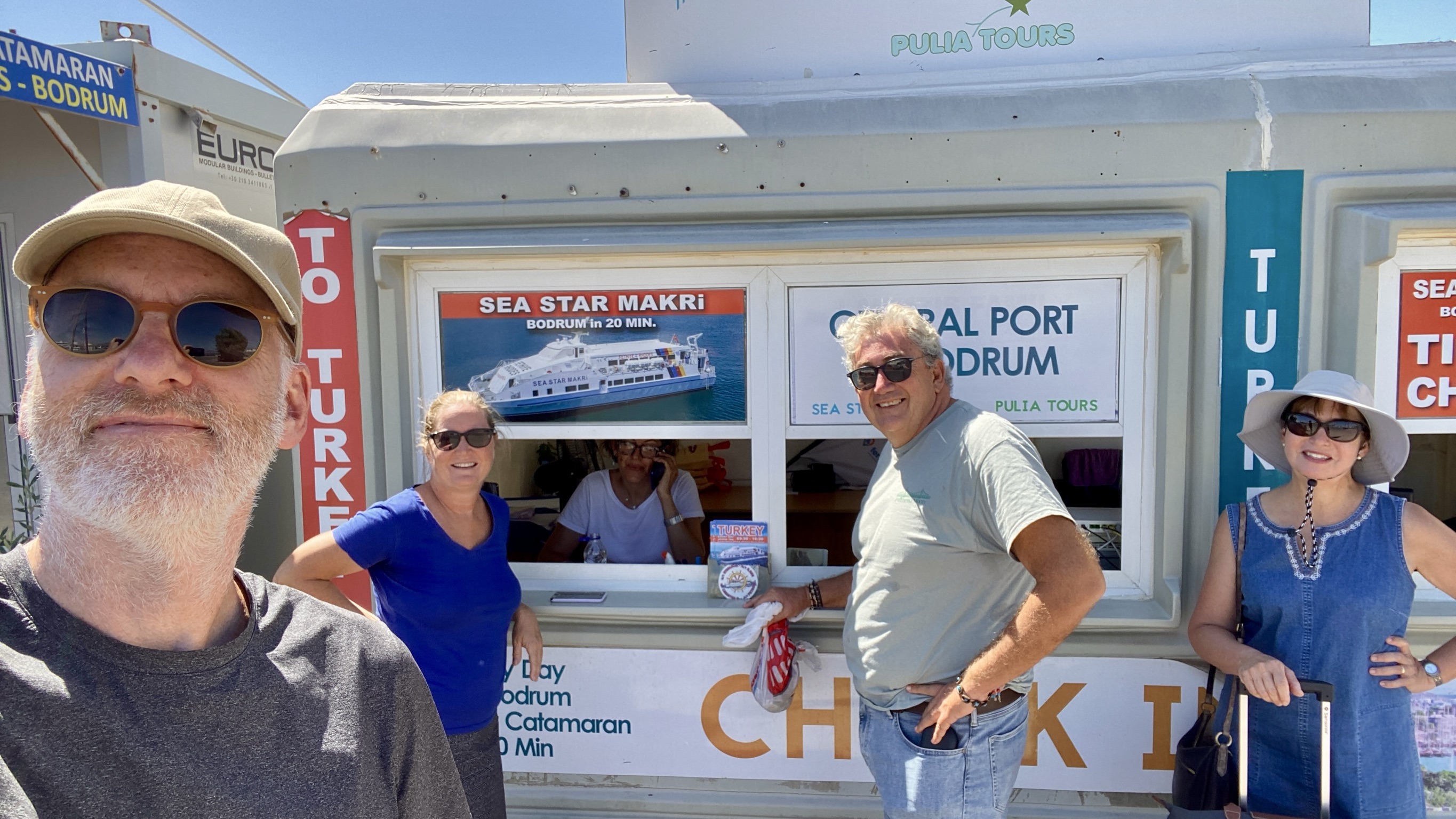
Despite arriving late in Kos, and so missing the ferry connection there, we made it to Bodrum and began the Turkish segment of our trip.